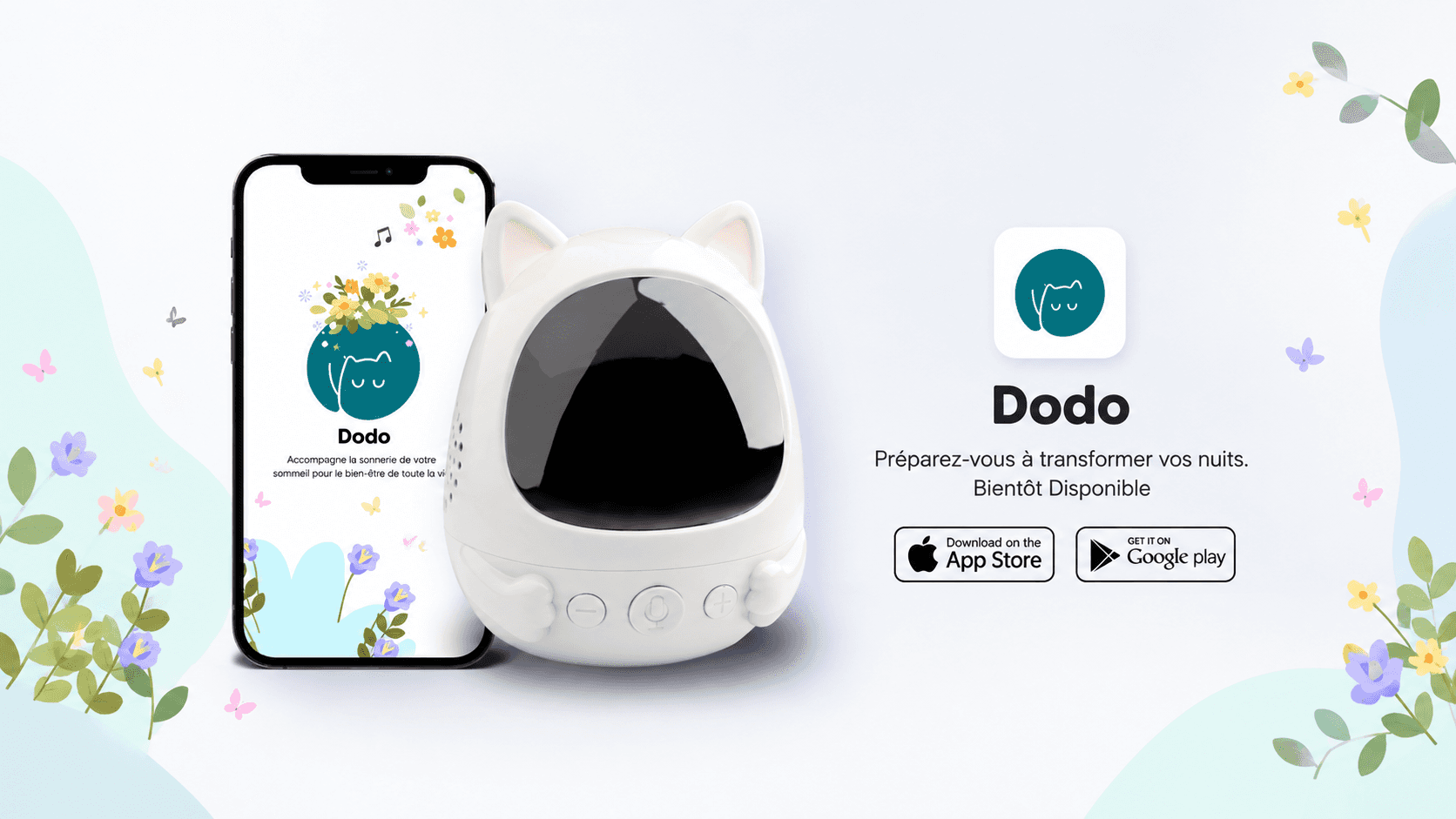
Dodo
A cat-shaped sleep assistant and companion app that makes a baby’s sleep visible — and the whole family’s night calmer.
UX research
Hardware UI
Form sketching
Node.js
Socket.io
Prototyping
Context
UXD1 course project, UTC — supervised by Nicolas Esposito
Team
Blanche Nguyen · Gakuto Sasabe · Hafizh Yasir Hamdani · Shiqi Yu
My role
User interviews, hardware UI & form sketching, technical direction and implementation
Research
5 semi-structured parent interviews · lo-fi street test · hi-fi test with 4 families
Context, problem, hypothesis
Children’s sleep is directly tied to their development and emotional stability, but most parents cannot tell what is actually disturbing it. They cannot read why the baby is crying, they panic, and the nightly improvisation wears them down.
Five parent interviews surfaced the same pattern: twenty minutes to an hour to get the child to sleep, two or three wake-ups a night, and guesswork that produces guilt — plus an uneven load between partners.
Existing products lean one way or the other. White noise machines, ear muffs, smart cribs and Babyplus either watch (analyse) or intervene (soothe), never both.
Hypothesis. If both are combined into one gentle device, we can reduce the parents’ load without damaging the attachment between parent and child.
Role and collaboration
A four-person team from Vietnam, Indonesia, China and Japan, so almost nothing about how to work was a shared assumption. That is the environment where I find my own strengths easiest to use.
User interviews
I interviewed a father of a six-year-old and a nine-month-old, listening for what he was actually struggling with rather than the features he asked for.
Hardware UI & form
I translated the team’s abstract “we want it to feel like this” into sketched shapes you could actually hold and touch.
Technical direction
I chose the phone-plus-web-app route and designed and built the real-time communication layer in Node.js, Express.js and Socket.io.
Having both the engineering experience and the UX perspective meant I could weigh in on team decisions from two sides at once: whether we could build it, and whether anyone would want to use it.
Process
Double diamond, six steps
Clarify the intent
Why, who, where, when, what and how — written down to define the axis of the project.
Competitive review
Analysed existing products and confirmed the value proposition: nothing combined analysis with environmental intervention.
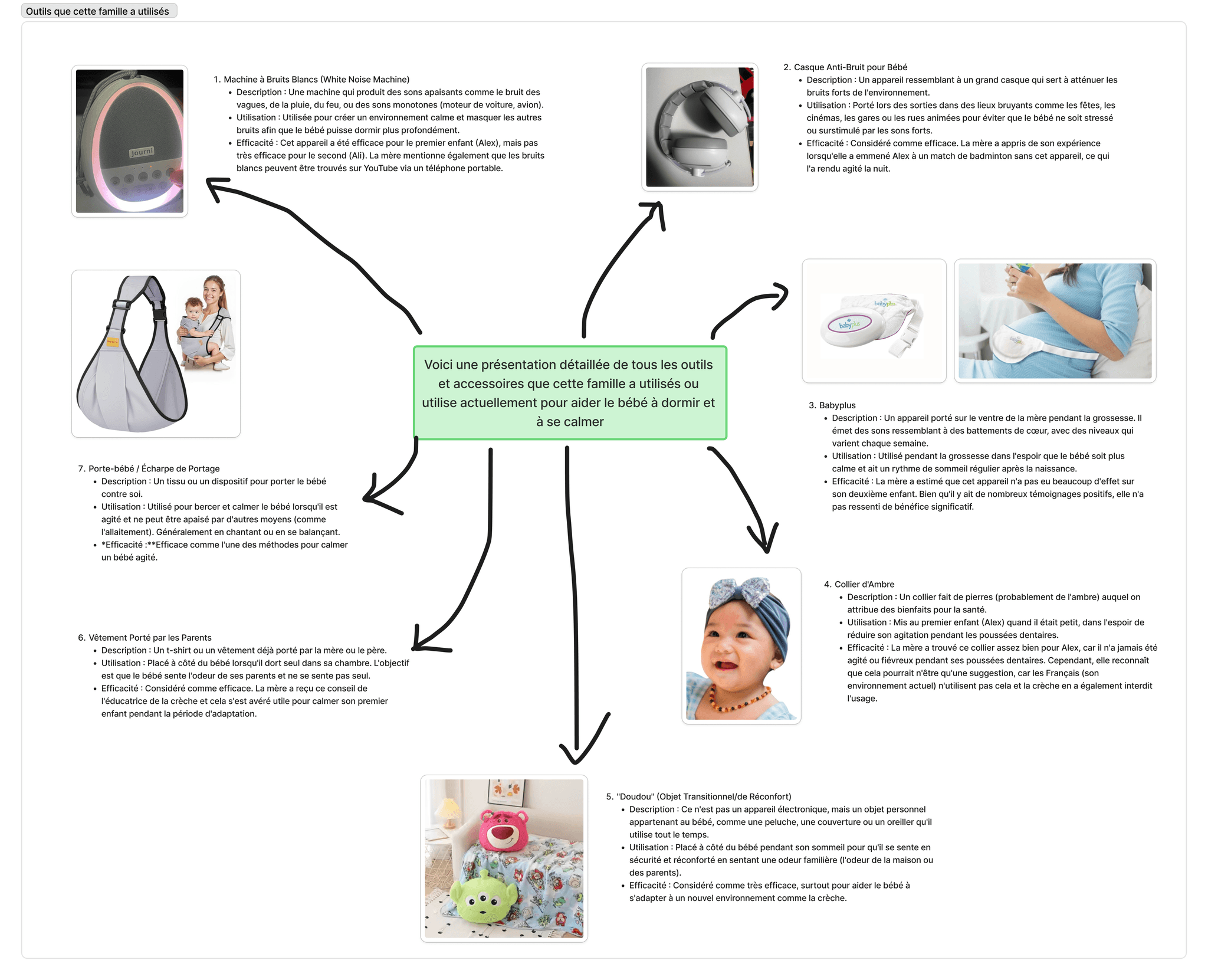
Competitive review
Persona & journey map
Semi-structured interviews with five sets of parents, then a persona and a user journey map built from what we heard.
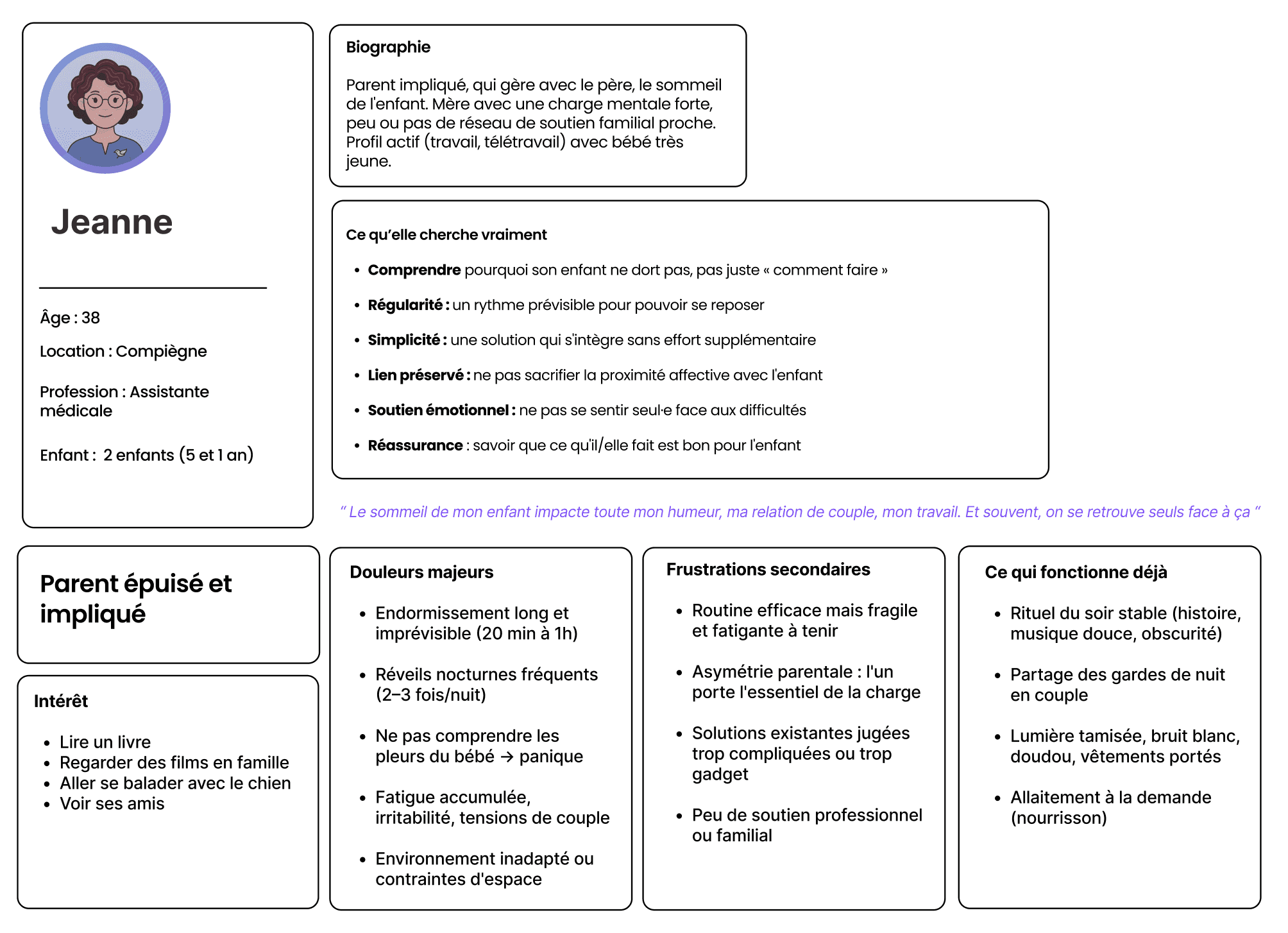
Persona — Jeanne
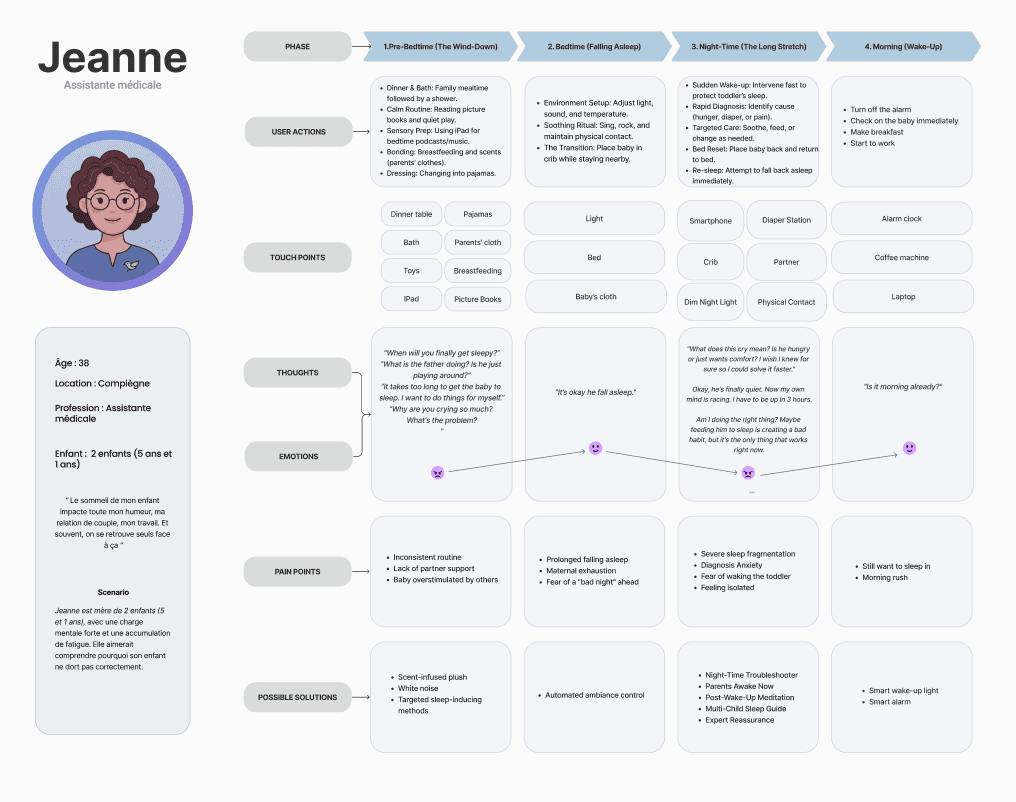
User journey map
Lo-fidelity validation
Storyboards taken to parents with children on the street, with a five-second test on first impression and comprehension.
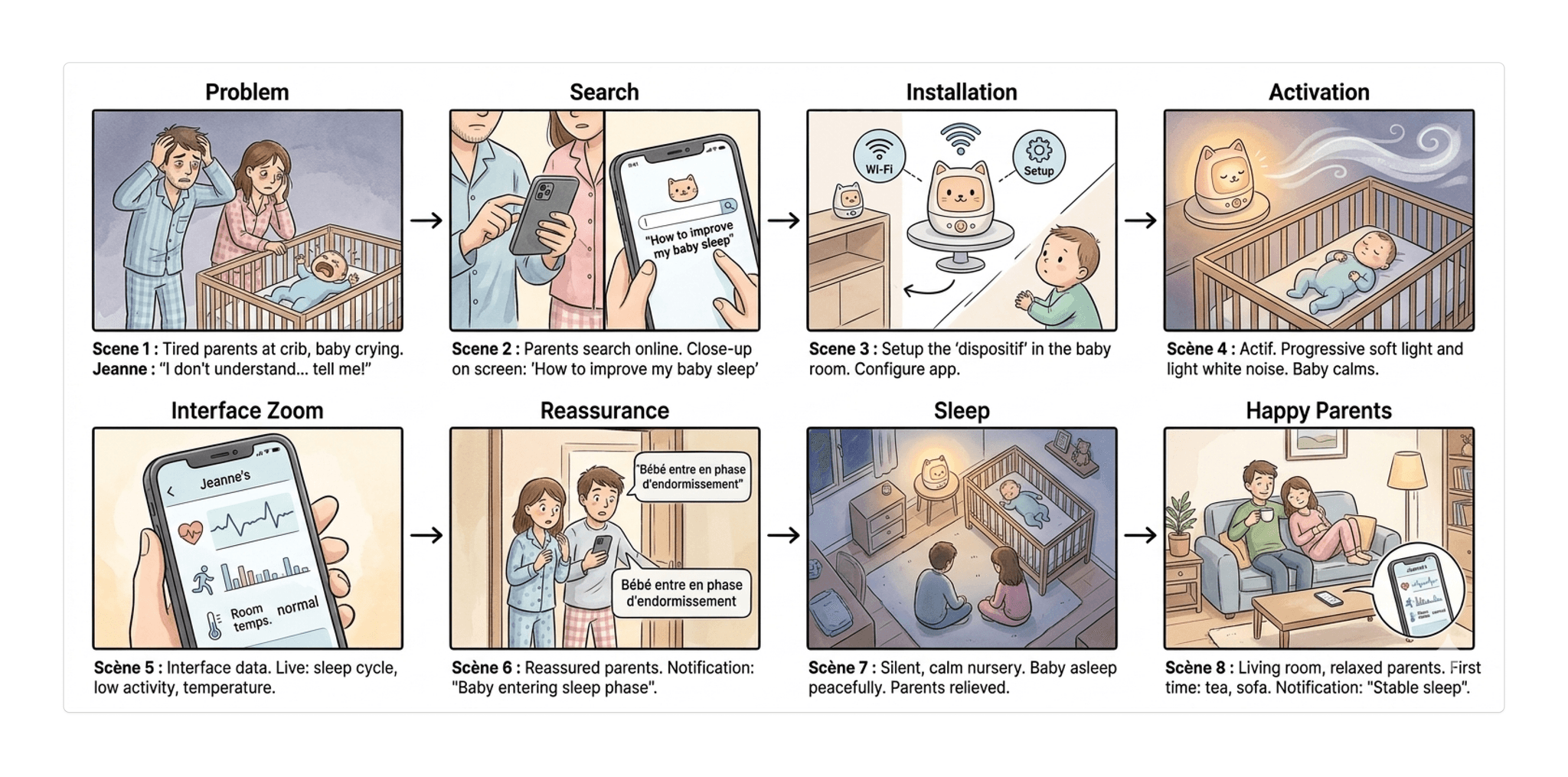
Storyboard
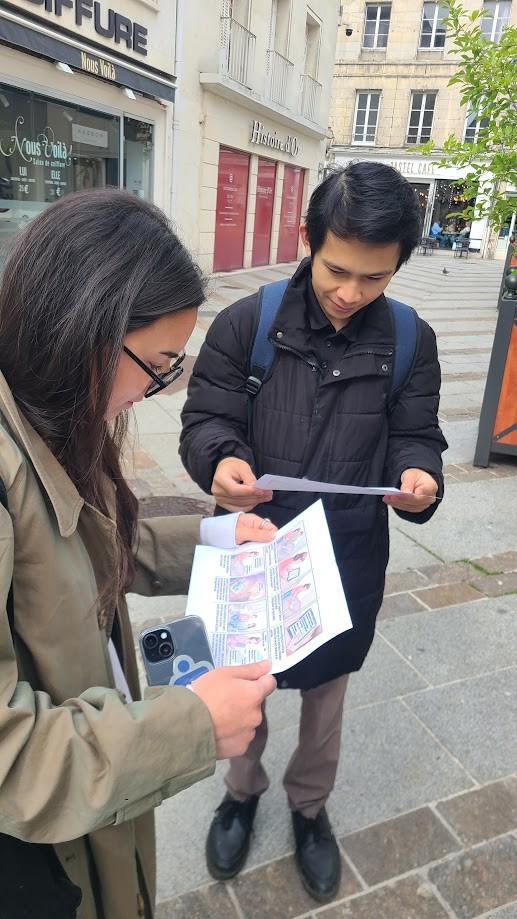
Lo-fi test in the street
Hi-fidelity prototype
A functional prototype built from a 3D print and a smartphone, plus the app UI and the real-time layer behind it.
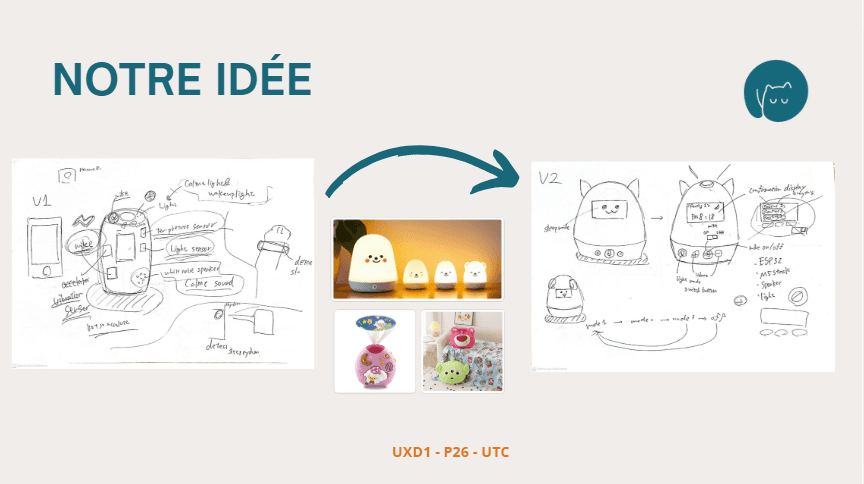
Form study and prototyping
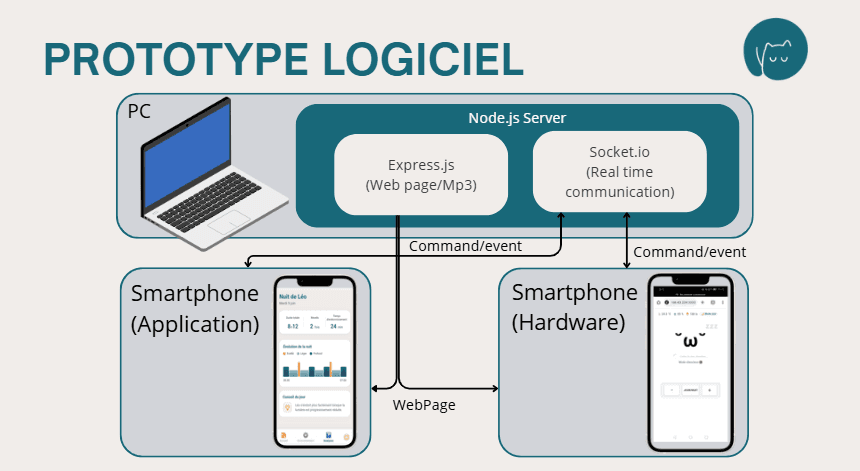
Software architecture
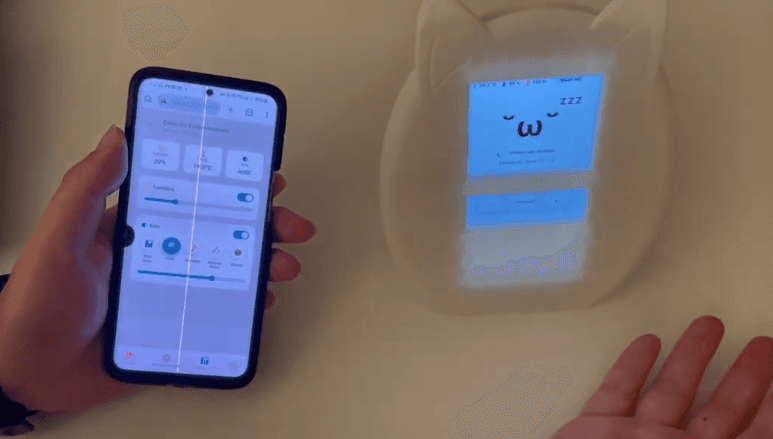
Functional prototype
Hi-fidelity prototype user testing
The device tested with four sets of parents, followed by interviews.
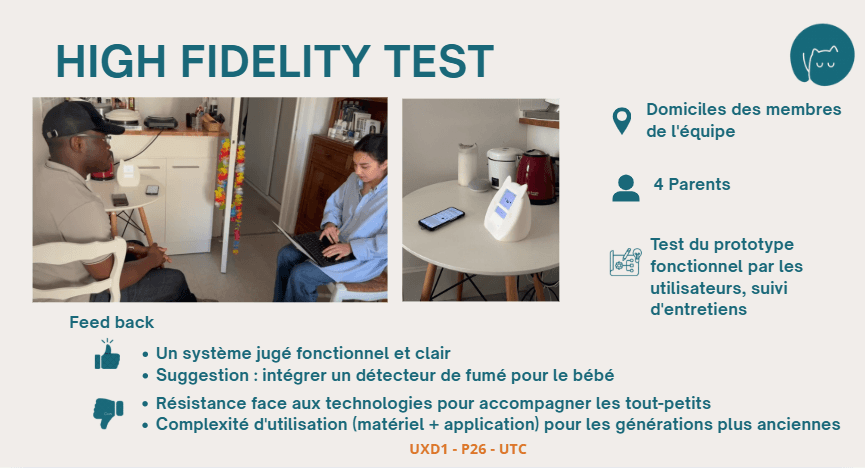
Hi-fi test, 4 parents
What the solution does
Where existing products stop at either watching or soothing, Dodo puts three things in one object.
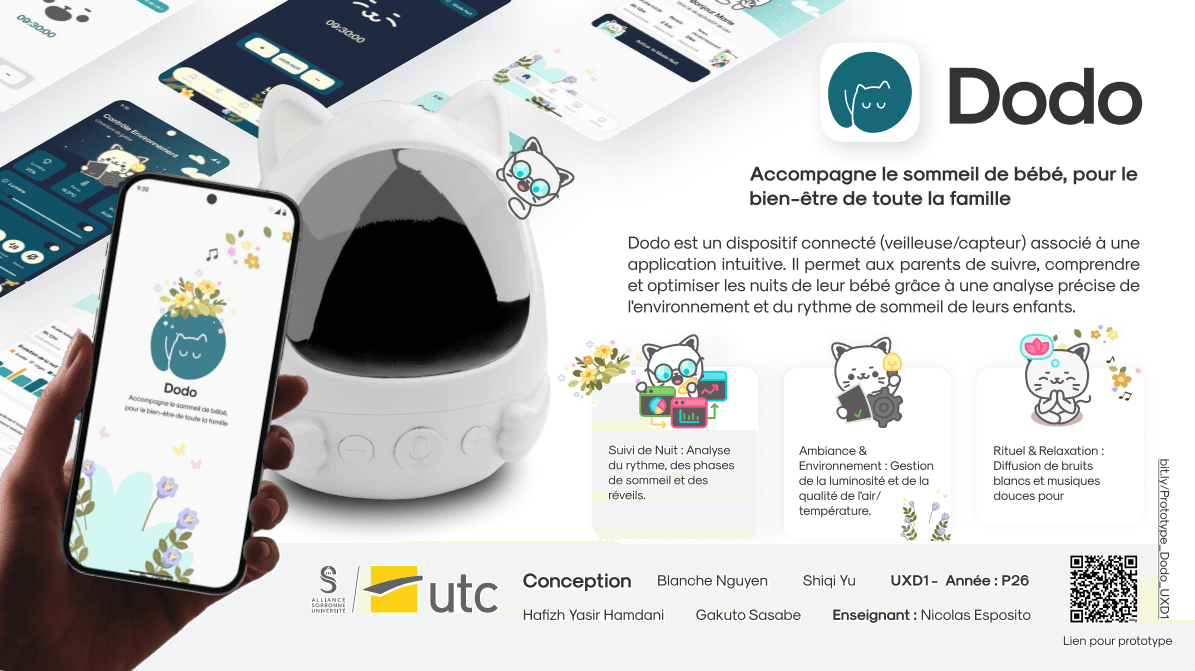
Solution overview
Make it visible
Depth, frequency and duration of sleep, presented so parents understand why the child cannot sleep rather than being told what to do.
Adjust the room
Light, sound and temperature are controlled automatically, taking the nightly improvisation off the parents.
Protect attachment
A soft cat character, and a deliberate decision not to replace human warmth — the doudou stays the child’s, not the device’s.
Results
Lo-fi test
Well received — “this could solve a real daily problem.” It also raised something we had not anticipated: concern about electromagnetic exposure from Wi-Fi.
Hi-fi test, 4 families
“Functional and easy to understand,” with an unprompted request to add a smoke detector. It also exposed two problems: older generations’ resistance to the technology, and operation that is still too complex.
It is small-scale validation inside a course project, but it identified both the initial concept’s reception and the specific problems to solve next.
Limits and learning
Five interviews and four test families is a small sample — there is no statistical backing here.
The demo was a simple prototype with a phone screen built into the housing; real sensor accuracy is untested.
The Wi-Fi exposure worry and the usability gap for older users are now clearly the next things to work on.