XSA
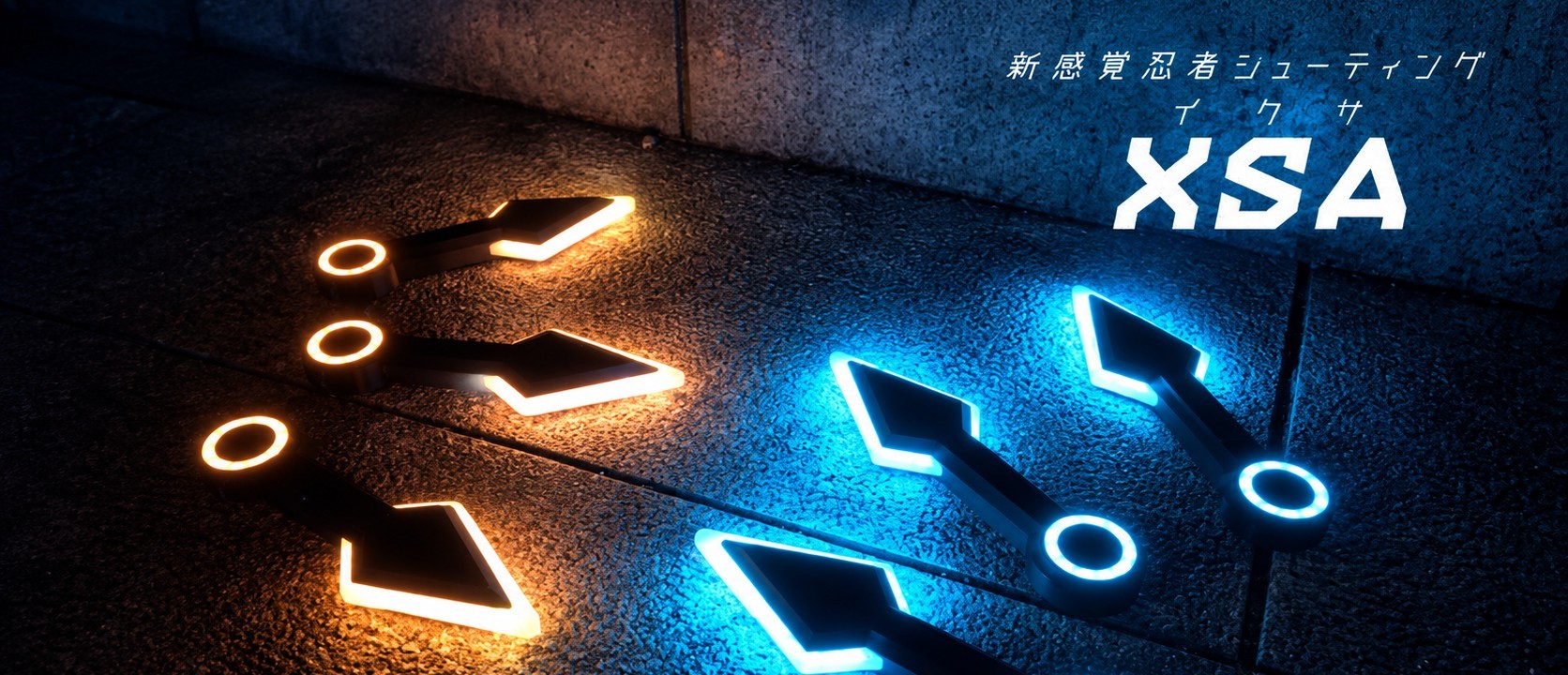
A new kind of shooting game where you become a ninja: throw invisible shuriken at each other with kunai-shaped devices.
Hardware design
3D printing
Web app
Infrared / embedded
Game design
Maker Faire
Context
Made for the 8th Taiyo Festival, a community recovery event in Ishinomaki, Miyagi (2018)
Team
ailab* — an Osaka-based team of engineers who make things on their days off
My role
Life-device enclosure design (CAD), second kunai device design, and the web management app
Recognition
GUGEN2019: sponsor prizes, including the Maker Bazaar Prize and the Quadcept Prize
Context and concept
XSA was born from a group of engineers who had volunteered in Tohoku disaster recovery and wanted to make the children of the affected areas smile. It was planned for the 8th Taiyo Festival, a community recovery event held in Ishinomaki, Miyagi, in 2018.
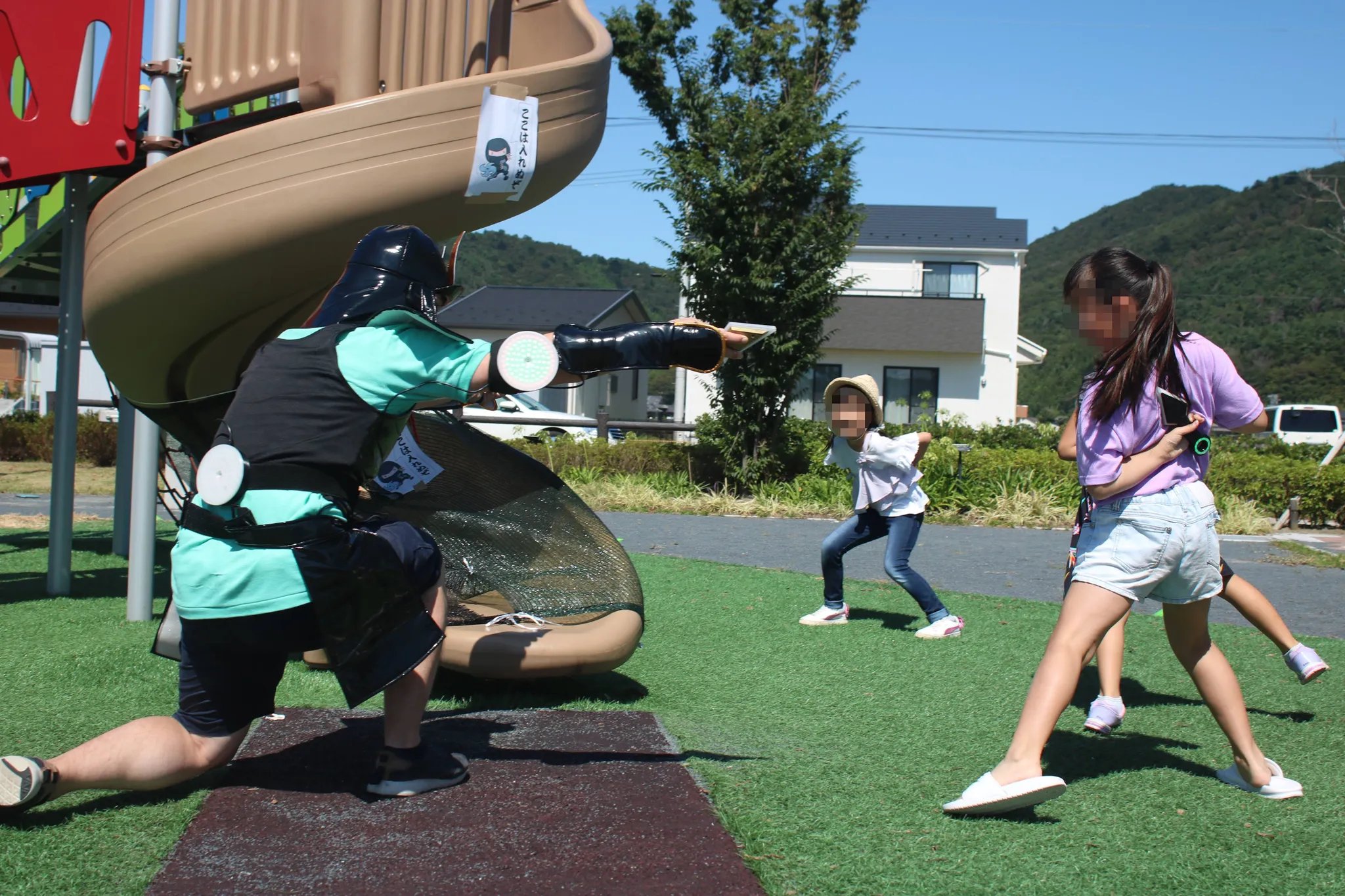
The brief we set ourselves: something easy to grasp, visually dynamic and instantly tempting to try. Rather than another gun shooter, we chose an intuitive, distinctly Japanese motion — throwing a shuriken like a ninja — so that adults and children alike could feel like ninjas on the spot, without any special skill or explanation.
Concept. Replace the trigger with a throw: a kunai-shaped device and the natural motion of tossing a shuriken.
Role and collaboration
Developed with ailab* (“ai-lab”), a group based in Osaka. Its members are engineers who, not content with their day jobs, get together on their days off to keep making things. Besides XSA they build shuriken-style survival-game devices and body-augmentation devices.
Enclosure design
I designed the life device’s enclosure in CAD and carried it through to 3D-printed parts.
Kunai device design
I designed the second kunai device.
Web management app
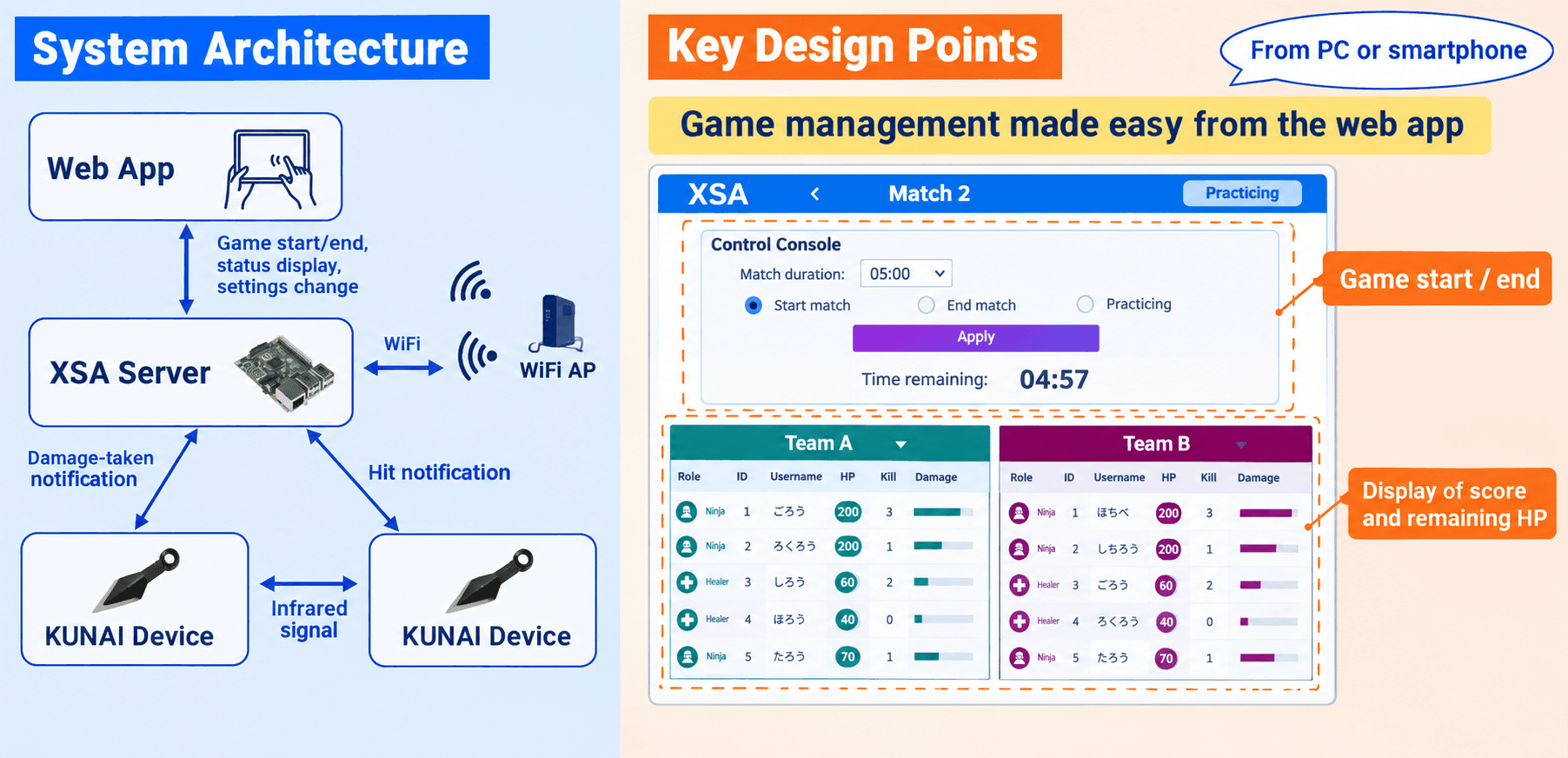
I designed and built the app that connects the PC and every device over Wi-Fi: starting and ending games, balance settings such as health caps, and live progress and remaining health.
From the industrial design of the hardware to the software that runs it, I worked on both the product’s look and how it works.
Process
From a festival idea to years of weekends
Where it started
Drawing on their volunteer experience in Tohoku, the team set out to create festival content that would bring smiles to children in the disaster-hit areas.
Concept design
Anchored on “flashy, easy to grasp, tempting to try,” the team chose a ninja × shuriken motif.
Device development
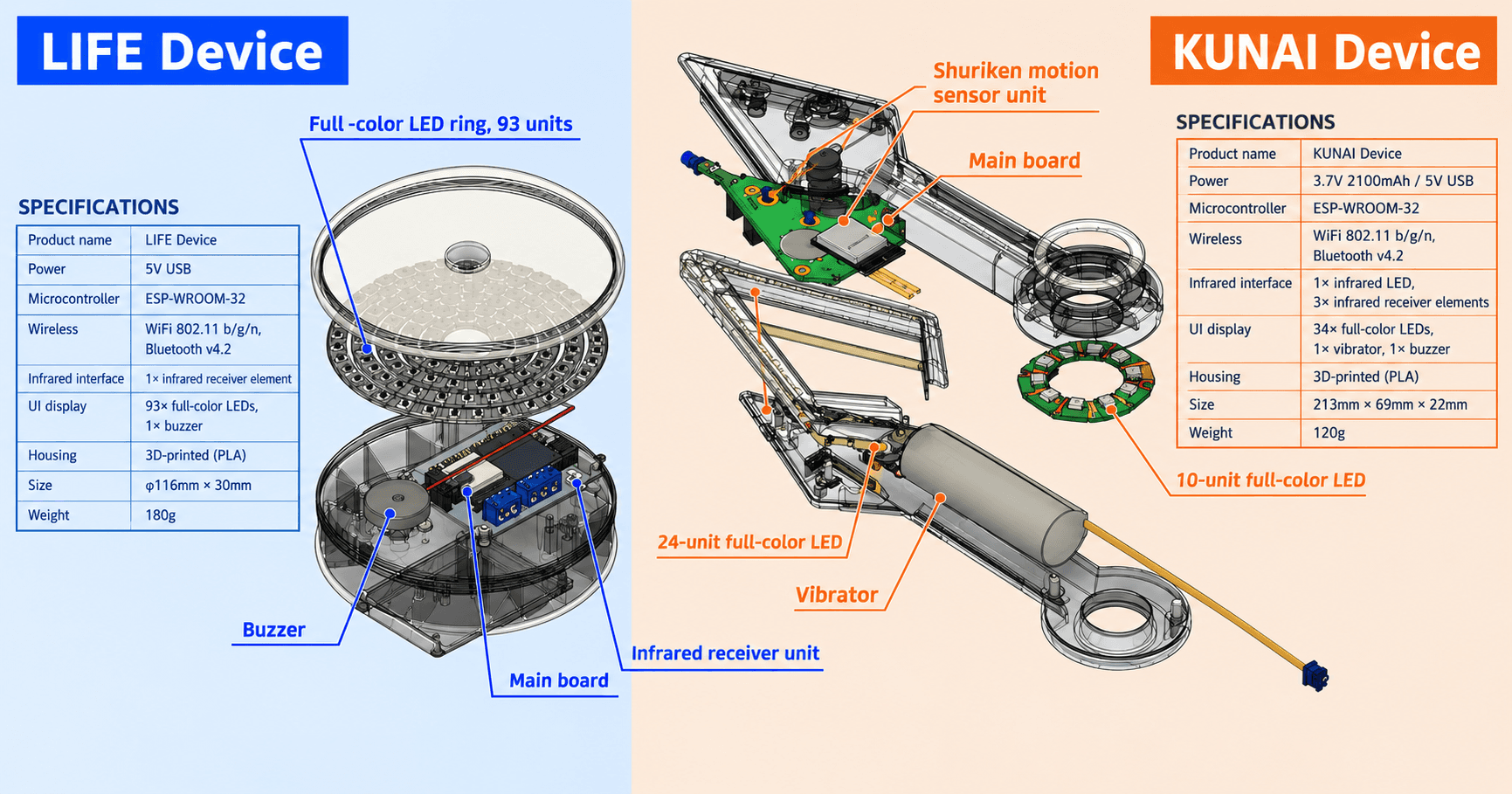
Three pieces were built: the kunai device, the life device and a real-time management app. The enclosures were made on a stereolithography 3D printer in a kunai-shaped design that appeals to the kid in everyone, and Li-ion batteries with USB-C charging support long, continuous play.
Kunai device
Detects the shuriken-throwing motion with a custom board and touch sensor, then fires the attack over infrared — the same technology as a household remote. 34 full-colour LEDs, a vibrator and a speaker add to the sense of presence.
Life device
A health-display device that receives the infrared and shows each hit by lighting 93 full-colour LEDs.
Real-time management app
Connects the PC and every device over Wi-Fi to start and end games, set balance such as health caps, and watch progress and remaining health live. Even when opponents are hidden behind cover, the game stays fair and strategic.
Continued development since 2018
After its debut at the Taiyo Festival, the team kept improving XSA and running it alongside their day jobs.
Exhibitions and presentations
XSA has been shown at GUGEN2019, Ogaki Mini Maker Faire (2022), Maker Faire Kyoto (2023) and Maker Faire Tokyo (2023).
What the solution does
XSA delivers a real battle experience in four ways:
Natural motion
No special skill needed: throwing a shuriken is all it takes, so anyone can pick it up and play right away.
Safe, real battles
Borrowing the infrared technology of household remotes makes for a proper battle experience that is also safe.
Multi-sensory feedback
Light, sound and vibration together create the immersion of actually being a ninja.
Flexible game modes
The Wi-Fi management app lets organisers run solo, team and commander battles with ease.
Not just a glowing toy: XSA balances entertainment with ease of operation, so it can run at outdoor events such as a festival in a disaster-hit region.
Results
GUGEN2019 hardware contest
Won sponsor prizes, including the Maker Bazaar Prize and the Quadcept Prize.
Maker Faire exhibitions
Kept exhibiting at Ogaki Mini Maker Faire (2022), Maker Faire Kyoto (2023) and Maker Faire Tokyo (2023).
Years of operation
Since its 2018 debut, members with day jobs have kept improving it on their days off — not a one-off prototype, but a product that has reached many children over several years.